Hong Kong
The method to hosting intimate conversations between strangers
with Shirley, founder of World Cafe CAT
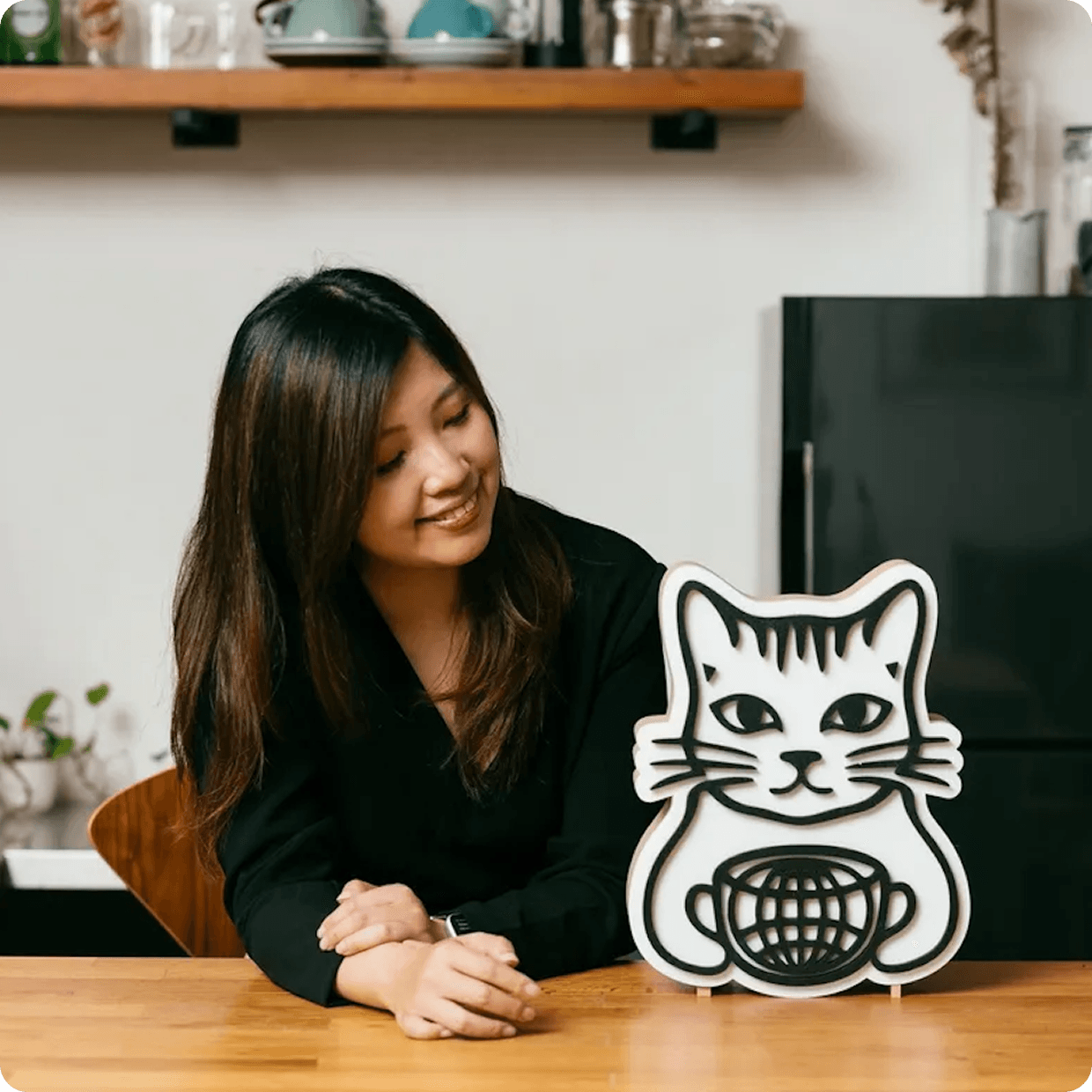
Shirley runs World Cafe CAT, a series of facilitated group conversations in Hong Kong. She’s hosted events on topics ranging from mental health to AI to community building while working full-time at a marketing job. I spoke with her about what it takes to help strangers talk to each other.
Zelda: You started hosting World Cafe CAT in 2023. What is it, and what drew you to this format?
Shirley: I love learning, and I’m really into intimate dialogue. How do we get people to talk and connect in a way that helps them?
There are many ways of doing this. It could be a party, a conference, a focus group. A friend introduced me to World Café, which originally came from California about 30 years ago. I joined one of their courses on hosting, and I started trying it myself in Hong Kong.
At the time, when I tried joining community events, I felt stuck. I’m not the kind of extrovert who can instantly connect with anyone and talk about anything. World Café really hit home for me. It has a built structure, but also a little freedom to connect with people authentically.
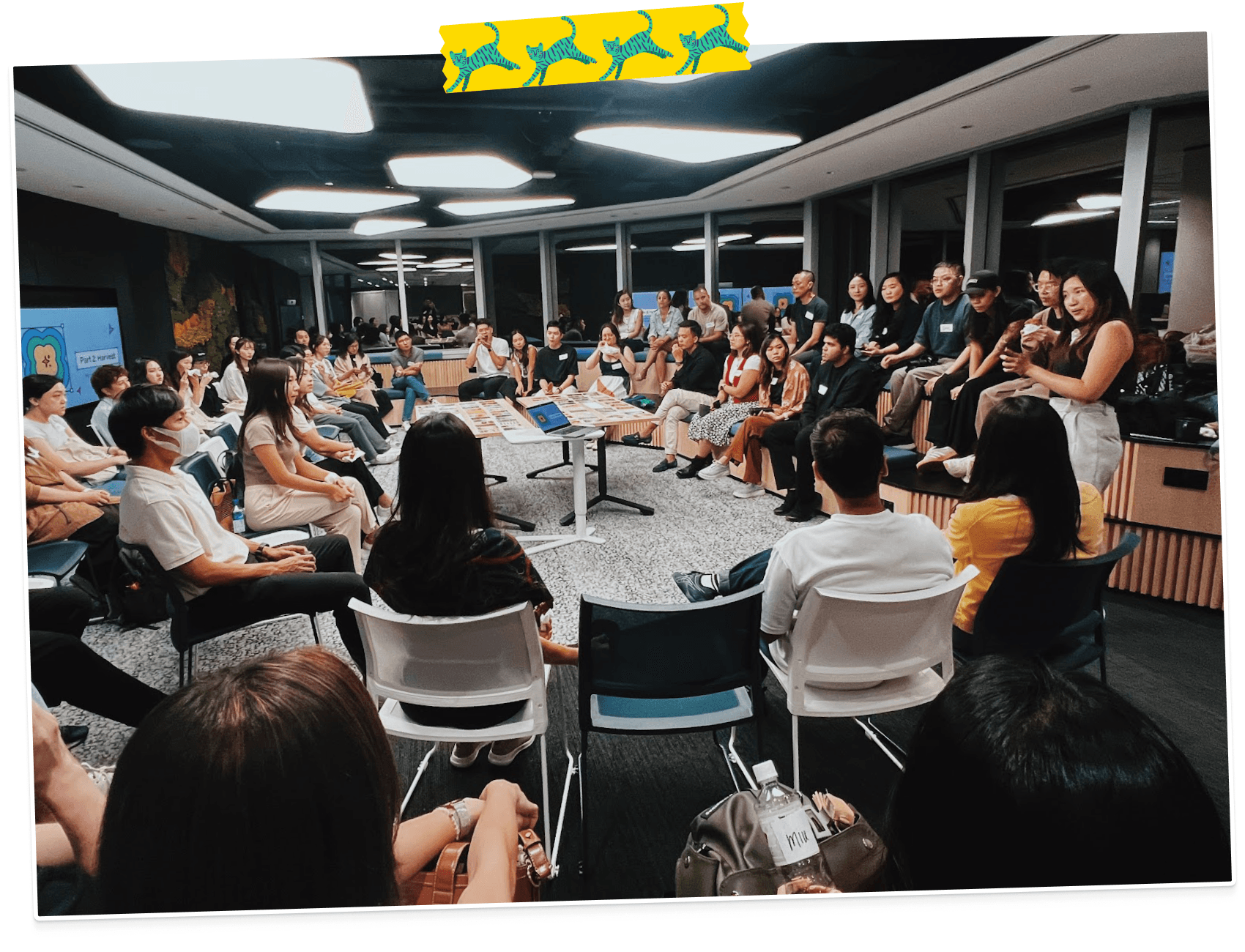
The format itself typically involves 12 or more people. You put them into small groups of 3 or 4 per table. You design 3 questions in advance related to the topic, and you run 3 rounds of about 15 to 20 minutes each. After each round, people rotate to different tables and meet new people. At the end, the whole group reunites for one last sharing called “harvest,” which literally harvests what we’ve learned. This is the collective wisdom.
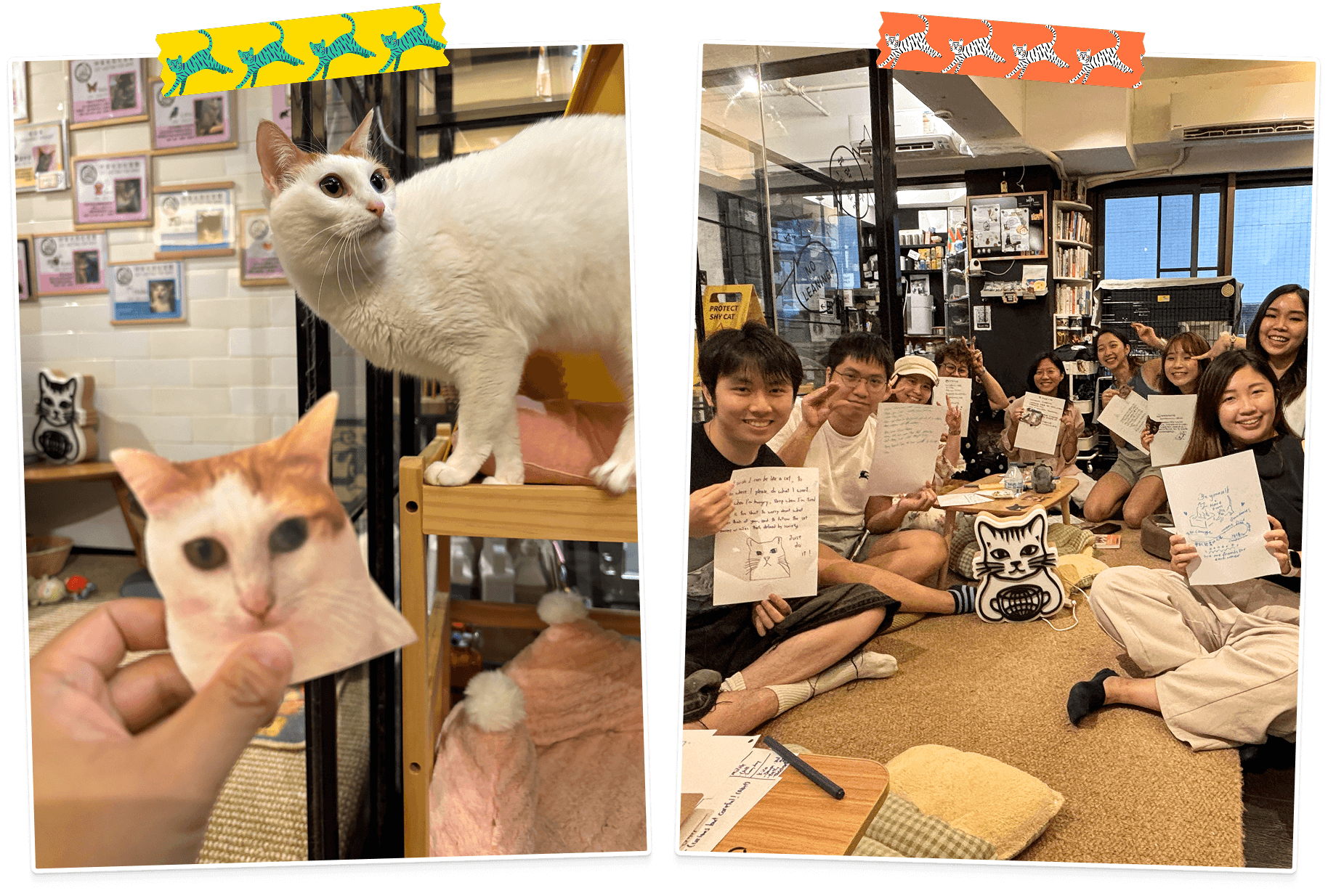
The benefit of this format is that it lowers the barrier to talking to strangers. You don’t have to worry about what you want to say or how to introduce yourself. You just focus on the questions and be authentic about what you think.
The “CAT” part in the name is my addition to the format. Most people who do World Café do it once in a while, or in a corporate setting for team building. I do it in a more deliberate way to support my local community. CAT means a couple of things, like catalyst, but it also stands for Conversation, Action, Transformation. That’s what I believe in.
Designing questions to invite strangers into intimate conversations is a subtle art. How do you come up with good ones?
The question decides the life and depth of the whole World Café. If you’re off, people get disengaged: they say, I can’t answer this question, it’s too hard. That’s not the point. You need the questions to feel answerable. Everyone should feel that they can contribute.
Generally, the three questions should be open-ended and progressive; related to each other, starting wider and becoming more focused. That way you can arrive at something more insightful by the end. It’s easy to oversimplify how important the question design is, but it’s really the core of the host’s job.
Take mental health as an example. For that session, the first question I asked was: What does mental health mean to you? Share one personal experience of how it plays out in your life. Very open. A housewife said she cares about it because she sees children in her neighborhood suffering. A teacher said it’s close to her heart. Someone recovering from mental health issues wanted to share her own experience. Just from that one question, everyone realized there were so many people who already cared about this topic, coming from very different angles.
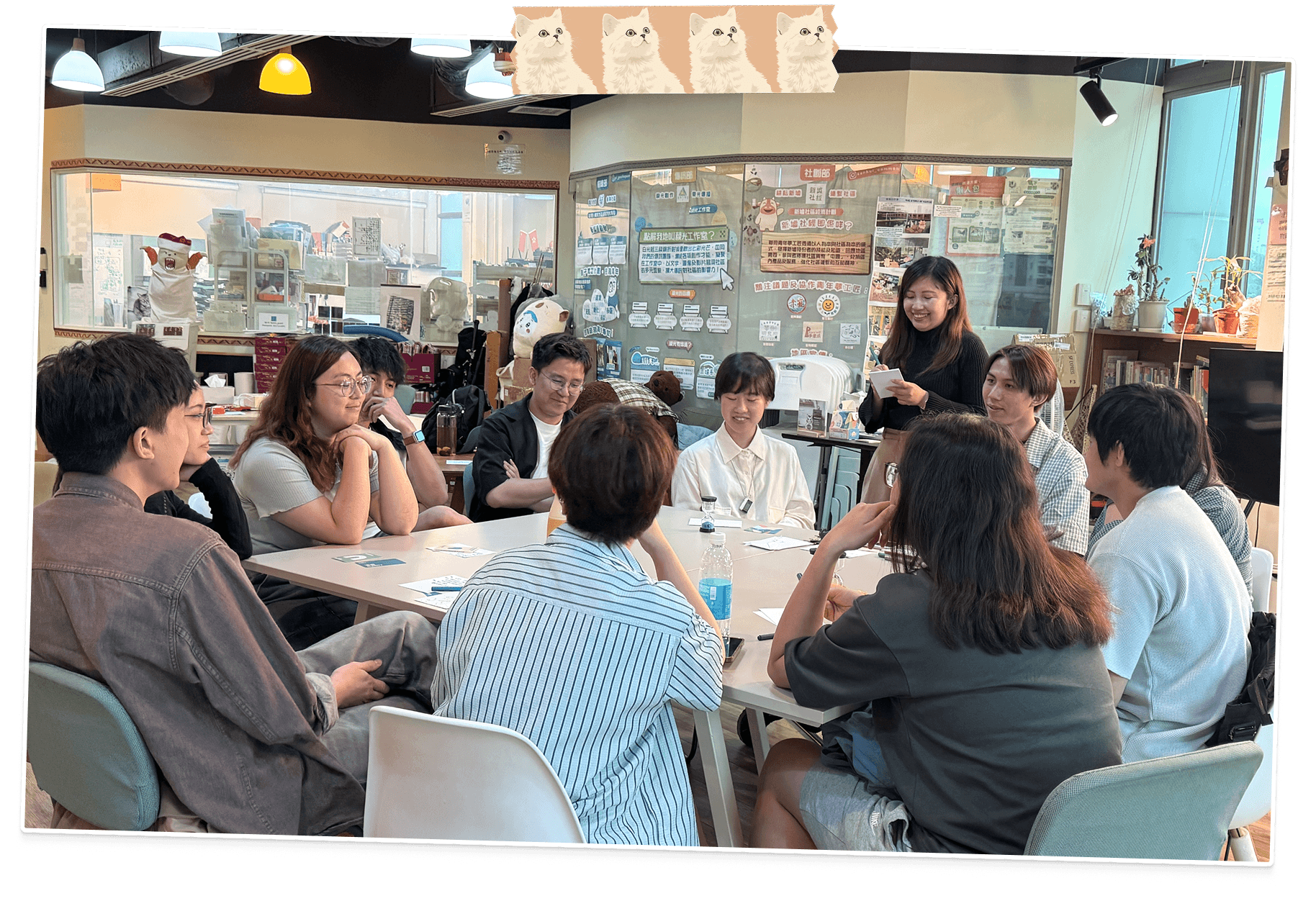
The second question was more creative: Using a metaphor, what could mental health look like? Draw it on paper. Describe its shape, color, smell. I give them pen and paper. At first people hesitate, but eventually everyone draws something. Someone drew Pac-Man — you’re constantly eating something to keep yourself up, or it eats you. Someone said it’s like a universe. Someone said it’s like a gym: we go to the gym for physical muscles, why don’t we practice mental muscles: practice sharing, practice expressing your feelings?
The third question was: Based on what you’ve heard so far, what new inspirations or possibilities do you see in embracing mental health? That’s where the collective wisdom emerges. In Hong Kong, mental health is still stigmatized; it’s the experts or the government who talk about it, not regular people. But what came out of the room was that this is something everyone should know about and talk about.
Each World Café revolves around a theme. How do you pick yours, and what makes a theme resonate?
I pick things that really matter to what people in Hong Kong need at the moment. Don’t bring people together just for the sake of it; World Café is about focus. When you have a strong intention, the people who are drawn to the topic are a lot more willing to share and contribute. They know why they’re coming. They’re prepared to be open-minded and curious.
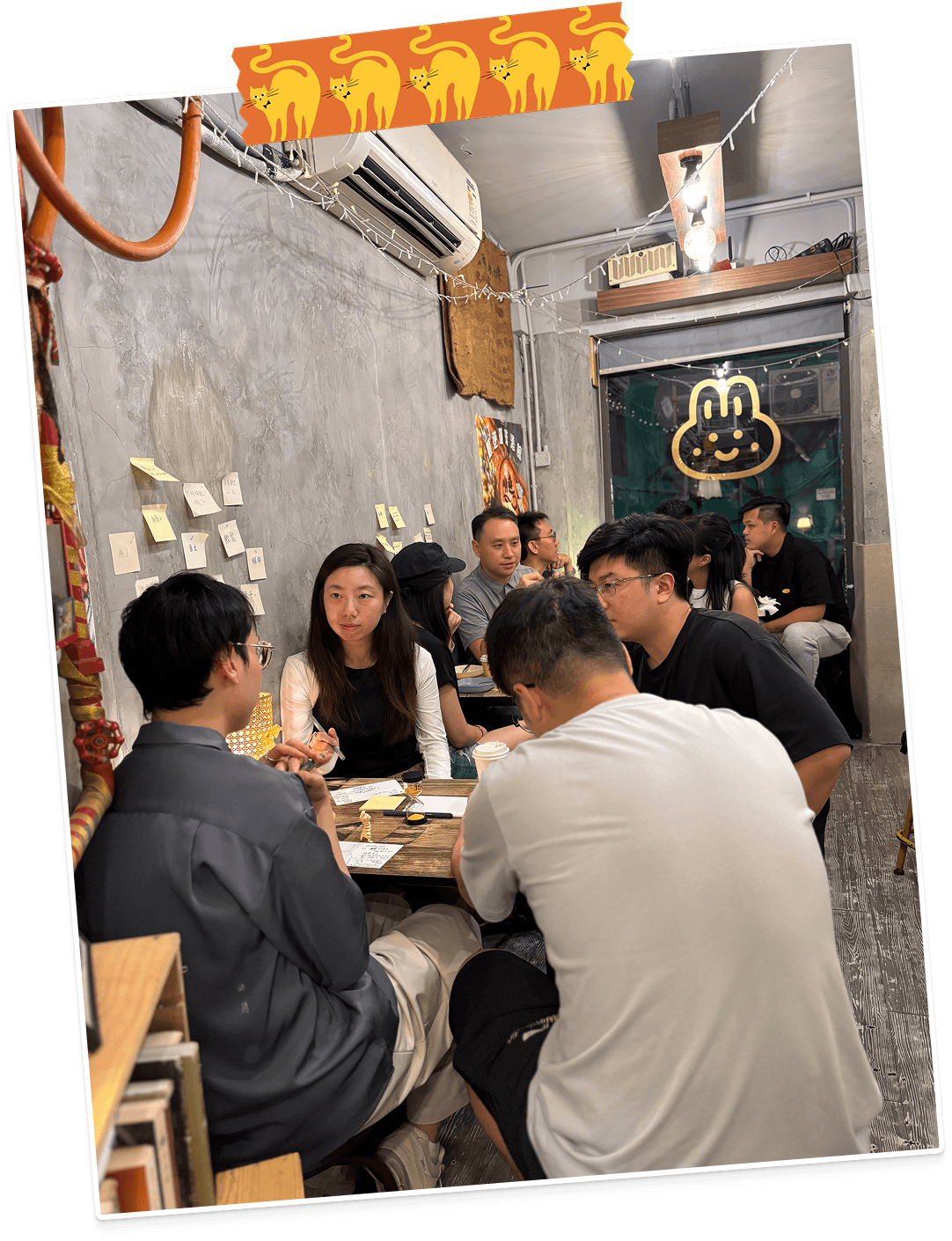
“My intentions for each session show up everywhere: in my copywriting, in my event description, in the pre-event reminders I send. It also shapes the design of the space.”
I hosted one World Café about AI, inspired by a documentary called The Thinking Game about the cofounder and chair of Google DeepMind. The event was in a restaurant, which is quite chill – beer, snacks – but nothing about AI. So I brought screenshots from the documentary and put them on the tables, to help people feel immersed in the topic. Because if you’re in a restaurant, there are people walking around, and it’s easy to get distracted.
How you show up as a host also shapes everything. Your presence cues people: is this a space I can share safely in? Can I bring something challenging? Is it okay to say something simple?
Let’s talk about group dynamics. How do you help someone who’s shy, and how do you handle the opposite, someone who takes up too much space?
This is where my own design touch comes in. For Hong Kong particularly, and I’d say Asian cultures more broadly, we tend not to be extremely talkative.
I put two sand timers on each table. One is 15 minutes to time the duration of each round, the other is 3 minutes. When you want to start sharing, you turn the 3-minute one over. When that runs out, the next person goes. It gives a gentle structure.
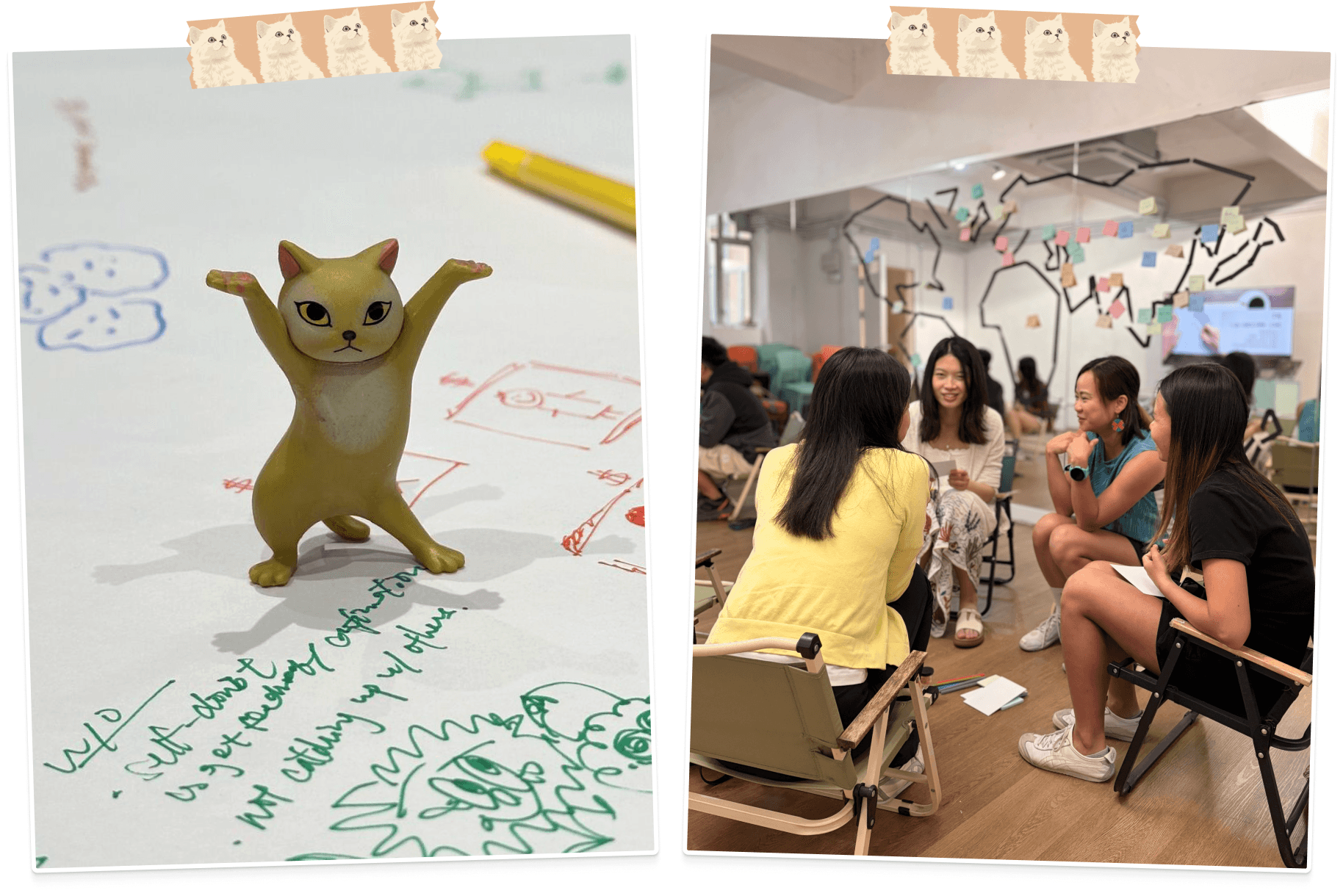
I also put a little cat object on each table: it’s like a talking stick. Whoever wants to share picks up the cat and speaks, then passes it to someone else. My hope is that within 15 minutes, everyone at the table has held the cat at least once. It’s a soft way to help shy people feel empowered. Because being shy doesn’t mean they don’t have something to say. They just need a little warm-up and a little invitation.
People also don’t have to speak to contribute. At World Café, we believe everyone matters, no matter how much or how little they say. Listening is a real contribution.
“At the harvest, sometimes it’s the quiet people who offer the most striking insights, because they’ve been listening attentively the whole time.”
For the opposite, someone who talks too much, the mechanism handles it on its own too. Because we change groups every 15 to 20 minutes, no one can dominate for long. The timer and the rotation do the work. You don’t really need to stop anyone; the format already has.
What would you recommend to someone who wants to host intimate conversations and build a community?
On the format itself, I’d encourage people to give a try at World Café. The process on paper is extremely simple: you can Google it or ask AI, and you’ll understand the mechanics in five minutes. But what makes a World Café actually work is the question design and the host, and you won’t get a feel for that from reading. You get it from participating. The World Café Foundation runs regular online sessions, while I and other hosts run them locally. I’d recommend experiencing a few different ones before you try to host, so you understand, in your body, what a good one feels like.
More broadly, on building community: I once hosted a World Café on community building, and the insight that came out of that conversation has stayed with me. A lot of people want to start a community because they feel lonely. They don’t feel they belong somewhere, so they bring people together. Which is good, but it’s not an intention that is sustainable.
My advice is: if you’re starting your community from a place of loneliness, sit with that and look for a deeper motivation. There should be something beyond your own need for connection that pulls people together. For me, it’s that I want to host conversations on topics that matter for people in Hong Kong, and I host them in local spaces to bring traffic and support those venues. Making conversation accessible while supporting my neighborhood — that’s the deeper intention.
This matters because people drift. They don’t belong to one community forever, and that’s natural. But if you know your purpose, you can accept that people come and go, and you won’t blindly expand your community just because you want to scale.
 Zelda Poemin April 2026